Gamania · beanfun!
Closing a platform,
properly
Winding down beanfun!, and carrying the 38,000 people still using it over to the next product.
01Why close a platform that's still alive
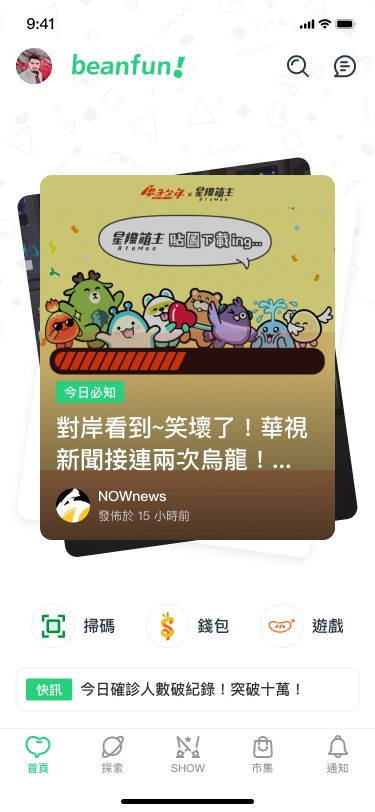
beanfun! was Gamania's group-wide platform. Messaging, clubs, news, comics, novels, a backpack of digital assets, fun市集 and a payment service all lived in one app.
The more features piled up, the clearer the problem became: each business unit was serving different users. People who came for comics, people trading digital assets, and people who only wanted to log in to a game were all put into the same app. Navigation was confusing and hard to learn, and for the development team, maintaining a do-everything platform cost far more than it returned.
In early 2024, after the business unit reported to group leadership, the decision was made: send these features back to their own business units, to serve the users who actually wanted them. I was handed the project in early January 2024.
Winding down isn't a verdict of failure; it's a decision to reallocate resources. The real problem was this: once the decision to split is made, how do you make sure the people already inside aren't left behind?
02It looks like closing an app. It's actually three layers
The first key judgment: who is the denominator?
beanfun! had close to a million registered users. But the people still using the community features — the ones with a reason and a willingness to move to hidol — numbered about 38,000.
Set a million as the target and the project becomes a marketing campaign doomed to fail: lots of resources spent reviving accounts that left long ago, ending with an ugly conversion rate. Set 38,000 as the target and the resources go to the people who actually need to be caught.
03Four things I did
1. Offer the replacement first, then retire the old
The order of the wind-down was deliberate:
When the version of beanfun! connected to the new account system shipped, I wrote into the plan that it was “expected to keep working normally until shutdown.” That wasn't a technical constraint; it was a deliberate buffer. Users needed time to get used to the new way of logging in, and until then, the old one couldn't be pulled.
Announce the shutdown before the replacement exists and you get panic and complaints. Get the replacement right, let people settle in, then announce — and the wind-down stays quiet.
2. Treat “what will users lose” as a first-class question
I built a data disposition table that put every piece of user data into one of four groups:
- Basic account data (phone, email, avatar, nickname, gender, birthday)
- Clubs joined and created
- Full settings and selected posts of designated clubs
- Assets: points, vouchers, stories, collectibles, items, unclaimed rewards, themes, stickers
- Transaction history: rewards claimed, exchanges, gifts
- Bio, shipping address, anonymity settings
- App activity records: mutes, blocks, subscriptions, verification times, login history
- bf! Coin
- Community: friends list, chat history, comments and replies, browsing history, event participation
- Non-designated clubs
- Basic account data and verification times
- Bio, shipping address, anonymity settings
- App activity records
- Community records: friends list, chat history, comments and replies, posts
- Full data of non-designated clubs
- Assets held by asset vendors, and their transaction history
- Settings: biometrics, two-factor authentication, notification preferences
- Notifications received and sent
This table wasn't written for engineers. It was written for customer support and legal: when a user asks “is my stuff still there?”, the front line needs one clear, consistent answer that doesn't require a judgment call on the spot, and the terms of service had to be written clause by clause from the same table.
3. Design a fallback path for migration
The biggest variable in moving fan clubs and posts was the creators themselves. If a creator never upgraded their account or registered on the new platform, their fan club couldn't move — and their fans would be stuck with it.
The fix: for anyone who hadn't upgraded by the deadline, fan-club ownership and post authorship were assigned to an operations account first, and engineering periodically handed ownership back to the creators from a list. Move the content first, settle ownership afterwards.
A migration can't be held hostage by a few people's progress. Let those ready to go move first, and leave a way back for those who aren't.
4. Leaving needs a proper checkout too
bf! Coin was something users had paid for. The process: close top-ups and purchases → announce → open refund requests for three months → support compiles the list, finance issues refunds, the back end updates the database. Creator earnings went through a separate refund process of their own.
We also defined account deletion: the nickname becomes “Deleted user,” the avatar is removed, phone and email become non-identifiable values, and QA verifies in reverse that neither the back office nor the app can find the user. Closing a product cleanly includes making sure people who want to leave actually can.
04I didn't set the schedule. The risk did
The project spanned operations, marketing, engineering and legal, across ten workstreams. But only one set the pace: the login service.
Game players have almost no tolerance for login problems — the account switch had to be completely painless, because a single failure hits revenue. And preparing the login system was itself close to a year of engineering.
So instead of making my own plan and asking everyone else to fit in, I did it the other way round: I re-planned every milestone around the riskiest dependency. How long the refund window stayed open, when notices went out, which day the servers went down — all of it followed that line.
A wind-down isn't judged by how fast it goes, but by whether its most fragile link was protected.
05Results
06What this taught me
Product people are used to talking about growth and rarely about winding down. But deciding what should stop is part of a product owner's job — and the quality of the stop often decides users' last impression of the company.
After eight months my conclusion is simple: offer the replacement first, then retire the old; write down what users will lose in a table, not an apology; and let the riskiest dependency set the pace, not the progress report. Get those three right, and the wind-down stays quiet.